How Google Reviews, GBP Posts, and Follow-Up Automation Work Together
A practical local trust workflow that connects ethical Google review requests, Google Business Profile posts, post-service follow-up, and useful content without overpromising search results.
Why local trust needs more than one tactic
A local service business rarely earns trust from one channel alone. A homeowner might see a Google Business Profile result, scan the review count, read a recent review, click through to a service page, notice an educational article, and then decide whether the company feels active enough to contact. Each signal is small on its own, but together they help the customer decide whether the business is responsive, credible, and still serving nearby customers.
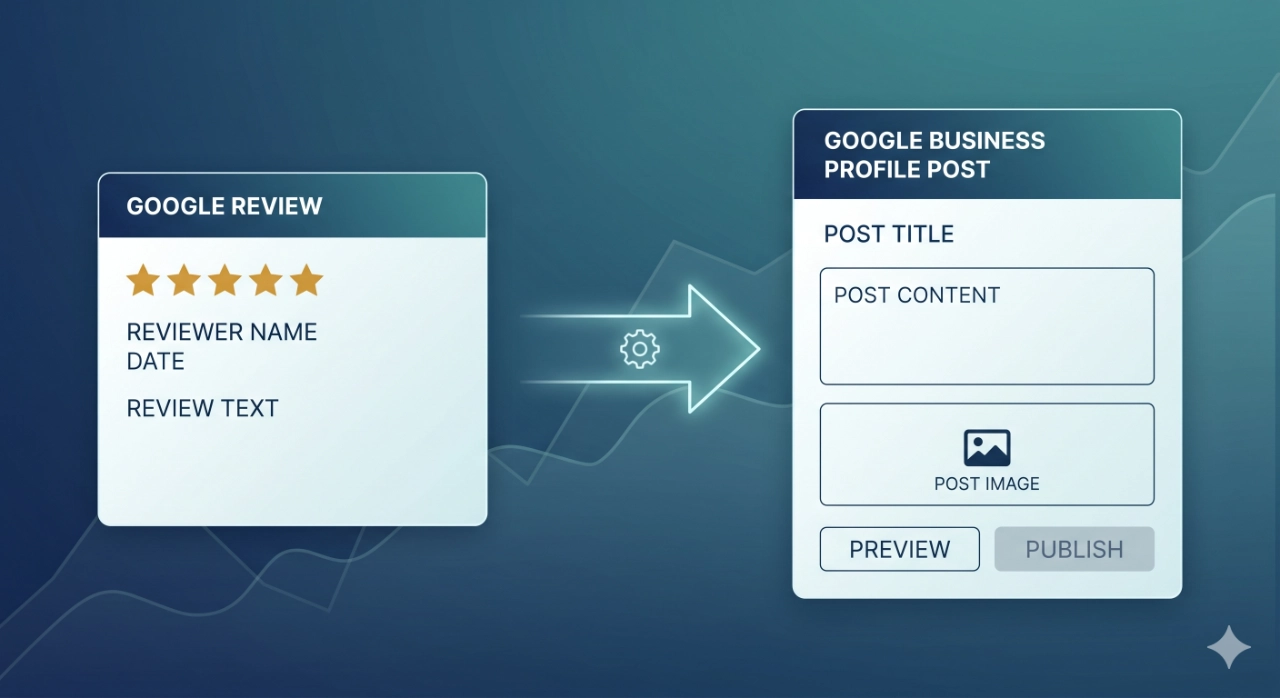
That is why Google reviews, GBP posts, and follow-up automation should not live in separate corners of the marketing plan. Reviews show customer experience. GBP posts show current activity. Follow-up automation helps the team ask at the right time, route unhappy customers to a recovery step, and keep useful local content moving after the job is complete.
This does not mean every review request or post will create a ranking jump. Local visibility depends on many factors, including relevance, distance, prominence, website quality, and competition. The practical goal is steadier trust-building: fewer missed follow-ups, more timely review requests, and more helpful GBP activity that supports the rest of the local SEO system.
How follow-up creates better review timing
The strongest review request usually happens after a clear service moment: the repair is complete, the customer understands what was done, and any open issue has been handled. If the team waits a week, the customer may forget the details. If the request goes out before satisfaction is confirmed, the workflow can feel careless.
Follow-up automation helps by turning the completed job into a consistent next step. A simple version can send a thank-you message, confirm the work is complete, and ask whether anything still needs attention. When the customer is satisfied, the next message can invite an honest Google review using the business's review link. If the customer reports a problem, the workflow should notify the team so they can resolve it before asking publicly.
Keep the request ethical and simple. Do not offer gifts, discounts, or special treatment in exchange for a review. Do not pressure customers to leave only positive feedback. Ask for an honest review, make the link easy to use, and let the customer decide what to write. The automation should protect consistency, not manufacture sentiment.
How GBP posts support service-page and article visibility
Google Business Profile posts are useful because they give local searchers a recent, business-controlled update near the moment they are evaluating options. For a Phoenix or Buckeye home-service company, a GBP post can point people toward seasonal maintenance advice, a service reminder, an article, or a booking page without forcing the whole message into the post itself.
Use the native CTA button instead of putting a phone number inside the post text. The post copy can summarize the customer problem, explain the helpful next step, and send the click to a relevant destination such as a service page, article, or contact section. That keeps the update clean and aligned with GBP best practices while preserving the website as the place where fuller information lives.
Posts can also support the content calendar. When a new article explains review follow-up, recurring service reminders, or speed-to-lead workflows, the paired GBP update can translate that article into a short local trust message. The article carries the depth. The GBP post signals activity and points interested customers to the next step.
A simple weekly local trust workflow
A useful workflow starts with completed work, not content ideas. Each week, review recent jobs, estimate approvals, recurring-service visits, and customer questions. Look for patterns that local customers would recognize: seasonal tune-ups, missed appointment windows, emergency repairs, maintenance reminders, or common post-service concerns.
From there, run a short weekly rhythm. First, confirm completed jobs and send follow-up messages. Second, route satisfied customers to an honest Google review request and route unresolved issues to the team. Third, choose one customer question or seasonal reminder and turn it into a GBP post. Fourth, link that post with a native CTA to the most relevant page, such as the recurring services page, lead generation page, a supporting article, or the contact section.
For Buckeye GMB clients, the first version does not need to be complicated. A practical weekly loop might include a completed-job trigger, a satisfaction check, a review request, one GBP update, and one internal note about what to write next. That rhythm creates cleaner handoffs between operations, local SEO, and customer retention.
Measurement and next steps
Measure the workflow by customer actions, not vanity activity. Track review requests sent, review requests skipped because of unresolved service issues, reviews received, average review age, GBP posts published, post CTA clicks, article visits, contact form submissions, and recurring-service inquiries. These numbers show whether the system is helping customers take the next step.
Review the results weekly. If review requests are being sent but few customers respond, check timing and message clarity. If GBP posts get impressions but few clicks, test a clearer service angle and a more relevant destination. If customers click through but do not contact the business, the landing page may need a tighter offer or easier conversion path.
Validation notes for editorial review: this article uses the target keyword Google reviews follow-up automation, links internally to recurring services, lead generation, the recurring revenue article, and contact, avoids incentive-heavy review advice, avoids promising specific SEO ranking outcomes, and includes a GBP pairing angle that relies on a native CTA button with no phone number in the post text.
RESOURCES
Connect review requests and service reminders to repeat visits, maintenance plans, and retention workflows.
Improve speed-to-lead and follow-up so local prospects receive a timely next step before they move on.
See how one-time jobs can become repeat service, reviews, and steadier customer relationships.
Map the first local trust workflow Buckeye GMB should help your team automate.
Make every completed job easier to follow up on.
Buckeye GMB helps Phoenix and Buckeye-area service businesses connect post-service follow-up, ethical review requests, GBP activity, and local content into one practical workflow.
Plan Your Follow-Up Workflow