The Follow-Up System Every HVAC Company Needs Before Peak Season
A practical follow-up workflow for HVAC teams that need faster lead response, booked tune-ups, estimate follow-up, customer reactivation, and review requests before the busy season.
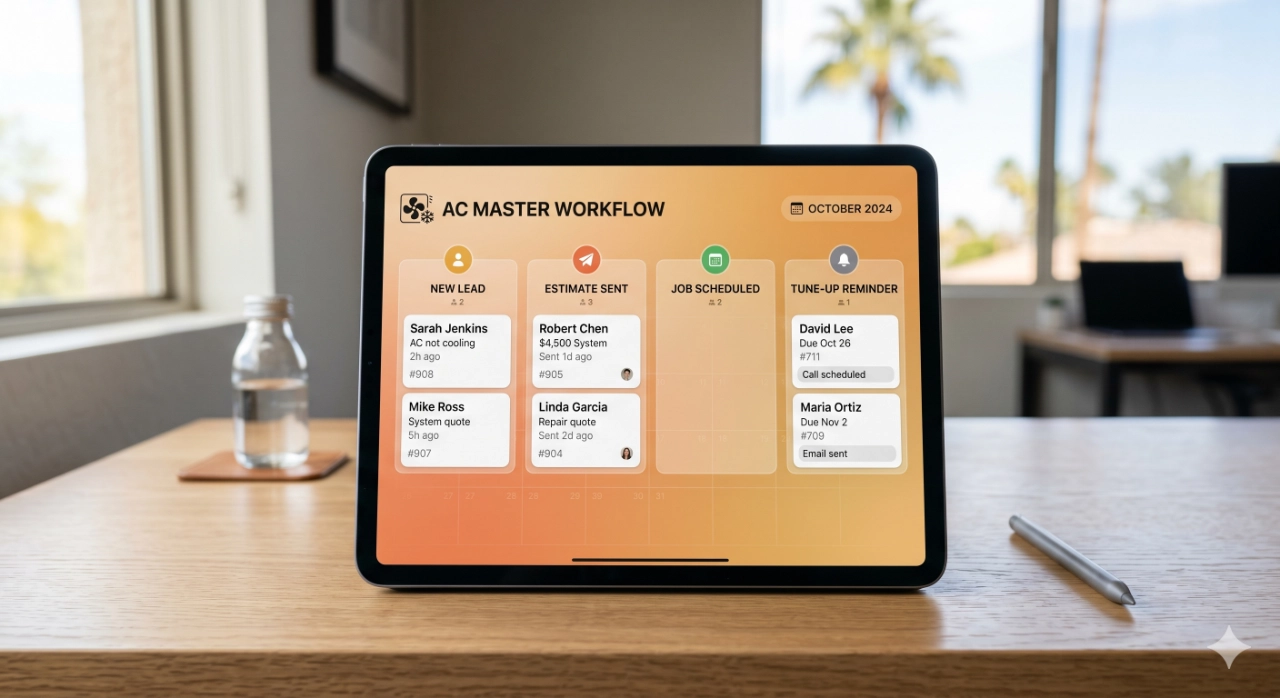
Why HVAC follow-up breaks before peak season
Peak season does not usually break an HVAC company because demand is low. It breaks the office workflow because every weak handoff gets louder at the same time: missed calls, slow replies, unreturned voicemails, open estimates, and maintenance customers who were never prompted to book before the heat arrived.
In Phoenix, Buckeye, and other warm-weather markets, the first major run of hot days can turn a normal week into a backlog. The companies that win more of that demand are not always the ones with the biggest software stack. They are the ones with a clear HVAC follow-up system that tells the team what happens next for every lead, estimate, tune-up, inactive customer, and completed job.
1. New inquiry response
Every new call, form fill, chat, or Google Business Profile message needs a fast first response and a defined backup path. If the office answers, the lead should be qualified and routed to booking. If the office misses it, the lead should still receive a quick text or email that confirms the request was received and points them toward the next scheduling step.
The goal is not to replace the dispatcher. The goal is to keep the lead from feeling ignored while the team is on another call. For an HVAC company heading into busy season, a simple speed-to-lead workflow can protect the highest-intent requests before they call the next contractor.
2. Estimate follow-up
Open estimates are easy to forget when emergency calls start filling the board. That is expensive because a replacement quote, repair recommendation, indoor air quality add-on, or maintenance plan may already have trust behind it. The customer has met the technician, seen the issue, and is deciding whether to move forward.
Set a standard follow-up cadence for every unsold estimate. A practical sequence might include a same-day recap, a next-day check-in, a three-day reminder, and a final message that offers to answer questions or adjust scheduling. Keep the message helpful and specific. The follow-up should reference the recommended work, the reason it matters, and the easiest way to book.
3. Seasonal tune-up reminder
Tune-ups are the most obvious workflow to systemize before peak season. Customers often intend to schedule maintenance before the first heavy cooling stretch, but they rarely remember on their own. A reminder system creates the prompt before the customer has an emergency.
Start with the customer list you already have: last year's maintenance customers, recent repair customers, warranty customers, and anyone who asked about maintenance but never booked. Send a clear reminder window, explain why the timing matters, and make the booking action easy. This is where the connection between follow-up and recurring service revenue becomes visible without turning the article into a maintenance-plan pitch.
4. Unscheduled customer reactivation
Most HVAC companies have a quiet list of customers who have not booked in 12, 18, or 24 months. Some moved away. Some chose another provider. Many simply never heard from the company again. Before peak season, that list deserves a reactivation workflow.
Segment the list by last service type when possible. A customer who had a capacitor replaced may need a different message than someone who completed a spring tune-up two years ago. The first version does not need complex personalization. It needs a clean reminder that the company is available, a relevant seasonal reason to act, and a direct booking path.
5. Post-service review request
A completed job should not be the end of the customer workflow. Once the work is done and the customer is satisfied, the system should trigger a review request while the experience is still fresh. For local HVAC searches, review velocity and recency can support trust before a homeowner ever reaches the website.
Keep the request simple and timely. Thank the customer, confirm the work is complete, and ask for a review using the preferred Google Business Profile link. If there was a service issue, route the customer to a recovery step first. Automation should help the team follow up responsibly, not push every customer into the same message regardless of context.
What to automate first
Start with the workflow leak that costs the most revenue during busy season. For many HVAC teams, that is missed new inquiries. For others, it is unsold estimates or unbooked maintenance. Pick one workflow, define the trigger, write the messages, assign ownership, and measure whether more appointments get booked.
A useful first build might be as small as missed-call text-back, form-fill confirmation, estimate reminders, tune-up reminders, and review requests. That is not a software overhaul. It is a practical service workflow that makes the next step visible for the customer and the office.
How to measure the system
The follow-up system should be measured by outcomes, not by how many automations exist. Track booked appointments from new inquiries, estimate close rate after follow-up, tune-up bookings from reminder campaigns, reactivated customers, review requests sent, and reviews received.
Review the numbers weekly during the run-up to peak season. If appointment volume is strong but review requests are weak, tighten post-service follow-up. If many estimates are sent but few are won, improve the estimate recap and reminder cadence. If tune-up reminders get clicks but few bookings, simplify the scheduling step.
The simplest useful HVAC follow-up system
Before peak season, HVAC companies do not need a complicated rebuild. They need a minimum reliable system: respond to every new inquiry, follow up on every open estimate, remind the right customers about tune-ups, reactivate unscheduled customers, and ask happy customers for reviews.
That system protects revenue that is already close to the business. It also gives the team a cleaner foundation for paid ads, SEO, Google Business Profile updates, and recurring services because the leads and customers generated by those channels are less likely to be lost in the rush.
RESOURCES
Build reminder and booking workflows around tune-ups, maintenance plans, and repeat service windows.
Tighten speed-to-lead, routing, and qualification before new HVAC requests go cold.
See how one-time jobs can become repeat service, reviews, and steadier customer retention.
Map the first HVAC follow-up workflow Buckeye GMB should help your team automate.
Put the follow-up workflow in place before calls stack up.
Buckeye GMB helps Phoenix and Buckeye-area HVAC companies connect lead response, tune-up reminders, estimate follow-up, customer reactivation, and review requests into one practical service workflow.
Plan Your Follow-Up System