Why Plumbing Companies Lose Repeat Customers After the First Job
Most plumbing customers do not leave because the repair failed. They leave because no one gives them a clear reason to book the next useful visit.
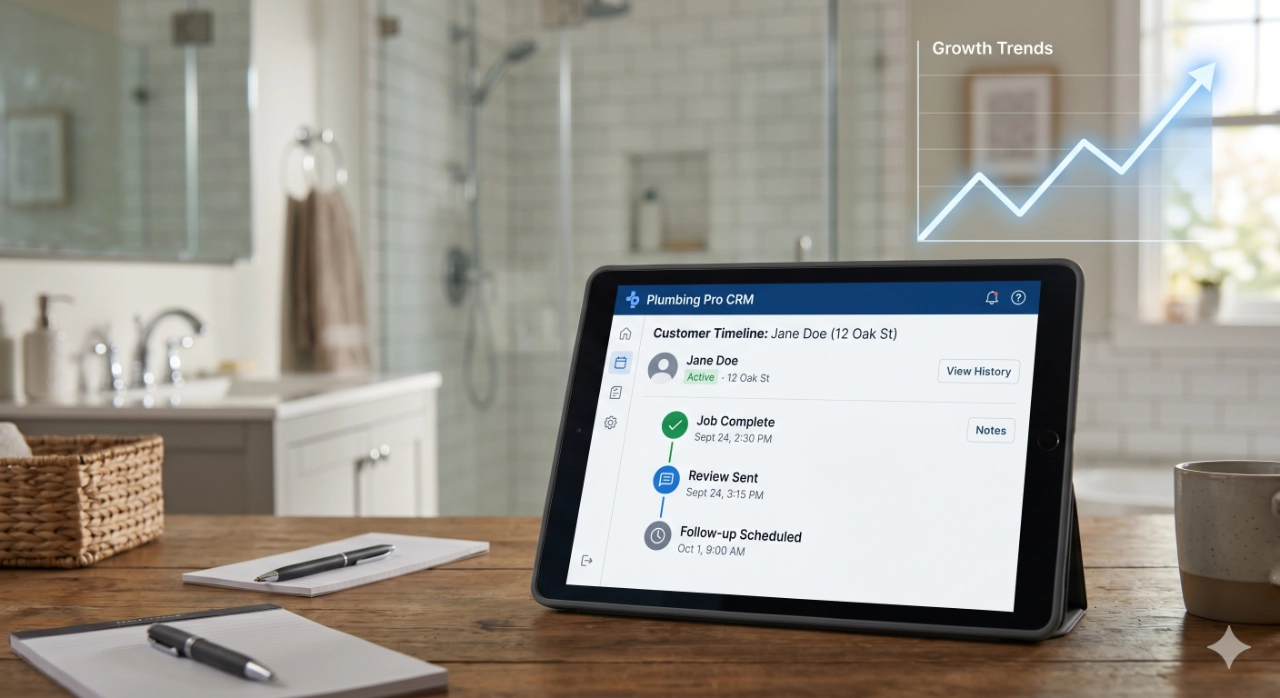
The first-job retention gap in plumbing
Plumbing customer retention usually breaks after the invoice is paid. The emergency leak is fixed, the drain is cleared, or the water heater is running again, and the customer goes back to normal life without a clear next step from the company.
That silence matters because plumbing problems are often connected. A clogged kitchen line may point to a maintenance need. A water heater repair may create a useful reminder six months later. A toilet repair may be the right moment to offer a whole-home plumbing inspection. If the company treats every job as a closed ticket, the next call often goes to whoever appears first in search.
For owner-operators and office managers, the goal is not to force every customer into a broad membership pitch. The practical goal is to make the post-job experience specific enough that a satisfied first-time customer knows when to call again, why the next visit matters, and how to leave a review while the good experience is still fresh.
Common reasons customers disappear after the first repair
Many customers disappear because the company never names the likely next problem. A technician may explain the repair in person, but the customer does not receive a simple follow-up that says what was done, what to watch for, and what check would prevent a repeat issue.
Another common gap is the missing service reminder. Water heaters, shutoff valves, supply lines, disposals, and recurring drain issues all create natural check-in points. Without a reminder system, the office has to rely on memory, sticky notes, or the customer noticing a problem after it becomes urgent again.
Review requests are another retention signal. When a plumbing company never asks for a review, it misses both public trust and a reason to re-engage the customer. A review request can be paired with a helpful check-in, so the message does not feel like a favor request only.
Segmentation is the final leak. A customer who called for a burst pipe should not receive the same follow-up as a homeowner with a slow drain, a landlord with multiple units, or a customer who just replaced a water heater. Better plumbing customer retention starts by grouping customers by job type, urgency, equipment, and next likely need.
Follow-up messages that create a second booking
The strongest follow-up messages are short, specific, and timed around the repair. A same-day or next-day message can thank the customer, summarize the completed work, link to the review page, and invite them to reply if the issue returns. This supports trust without sounding automated for the sake of automation.
A second message can arrive a few weeks later for jobs with recurrence risk. For drain clearing, that might be a check-in about slow drainage, odors, or backups. For leak repairs, it might remind the customer to look under the sink or around the repaired fixture. For water heater work, it might point toward flushing, age, corrosion, or inconsistent hot water.
The message should make the next action easy. Instead of saying "call us anytime," use a clear offer such as "schedule a water heater check," "book a drain line inspection," or "have us look at the fixtures we discussed." Clear language turns a good first repair into a second useful booking.
Maintenance and inspection offers that make sense for plumbers
Plumbers do not need a generic maintenance plan to improve retention. They need offers that match the way plumbing problems show up in real homes. Water heater maintenance, annual shutoff valve checks, fixture inspections, drain health checks, pressure checks, and seasonal leak-prevention visits are easier for customers to understand than a vague plan with unclear value.
Emergency jobs can also become maintenance opportunities when the follow-up is framed around prevention. After a weekend backup, the next offer might be a camera inspection or a scheduled drain check. After a water heater repair, the next offer might be a flush reminder or replacement planning conversation based on age. After a supply line leak, the next offer might be a whole-home inspection of visible lines, valves, and fixtures.
For office teams, the retention system should be simple enough to run every week. Tag the job type, choose the follow-up path, send the review request, and schedule the next reminder before the customer record goes cold. The system should help the team act consistently, not create another dashboard no one uses.
How reviews and GBP activity reinforce trust
Reviews help plumbing retention because they make the customer's good experience visible and memorable. A satisfied customer who leaves a review has already taken a second action with the company, which makes a later reminder feel more familiar.
Google Business Profile activity supports the same trust loop. Posts about drain checks, water heater maintenance, seasonal shutoff inspections, and post-repair check-ins show that the company is active, practical, and focused on preventing repeat problems. These updates also give office managers a reason to talk about maintenance without turning every message into a hard sell.
A useful GBP post for this article would focus on checking in after plumbing repairs and helping customers prevent repeat problems. Keep the post text short, avoid phone numbers, and use Google's native CTA button to send customers to a booking or contact page.
The best plumbing retention systems are not complicated. They close the gap between a completed repair and the next helpful action: a review, a check-in, a reminder, an inspection, or a maintenance visit that prevents the next emergency from becoming another first-time search.
RESOURCES
See how Buckeye GMB turns one-time home service jobs into practical follow-up and maintenance workflows.
Connect retention work with lead response, call tracking, and local search campaigns.
Review examples of structured local marketing and conversion improvements.
Ask Buckeye GMB to map the follow-up gaps after your first plumbing visit.
Turn completed plumbing jobs into the next useful booking
Buckeye GMB helps plumbing teams build follow-up paths for repairs, water heater checks, drain issues, review requests, and seasonal reminders without adding busywork for the owner or office manager.
Map the follow-up plan