Estimate Follow-Up Automation for Home-Service Companies
A practical estimate follow-up workflow helps contractors recap recommendations, answer objections, and recover booked work without sounding pushy.
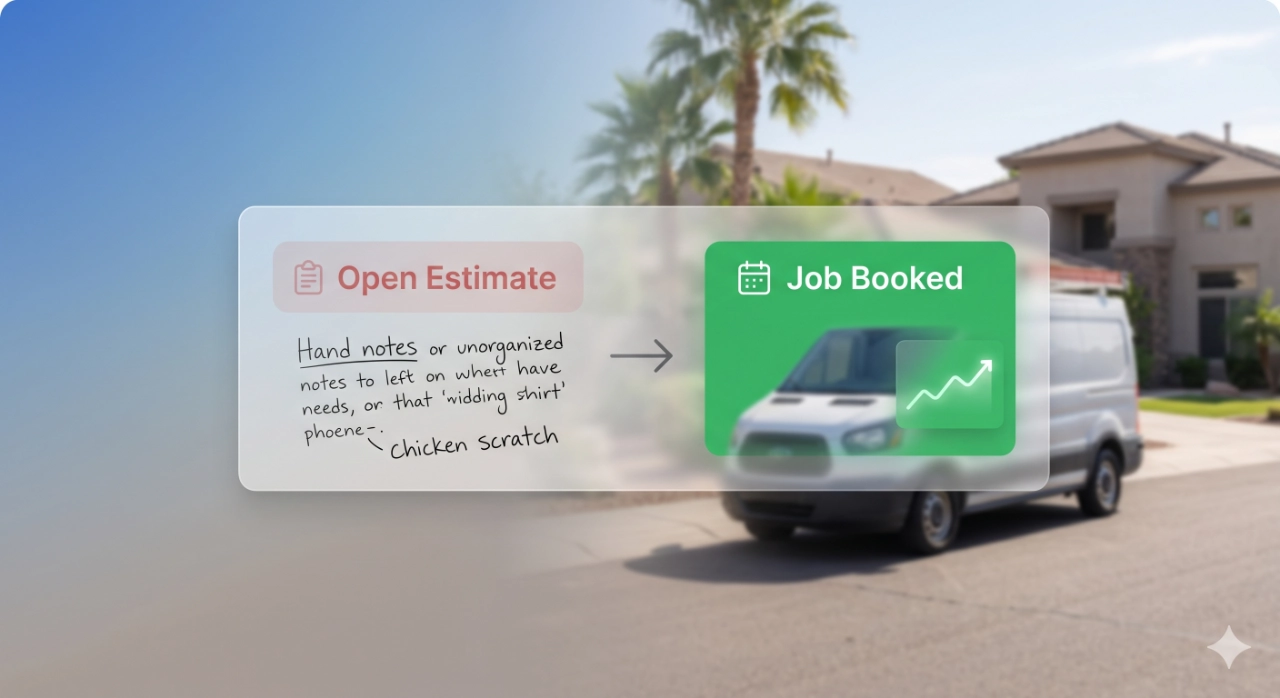
Why estimate follow-up gets lost in busy service operations
Estimate follow-up usually fails for ordinary reasons. The technician leaves for the next call, the office is handling dispatch, and the customer who asked for a quote is no longer the loudest item on the schedule. By the end of the day, a water heater replacement, pool pump repair, or landscaping project can sit in the CRM with no clear owner.
That gap is expensive because open estimates are not cold leads. The customer has already explained the problem, met the company, and received a recommendation. If a Buckeye homeowner got an HVAC replacement option on a 110-degree week or a Phoenix customer asked about a plumbing repair before guests arrive, the follow-up needs to be prompt, useful, and easy to answer.
The goal is not to chase people forever. A good estimate follow-up workflow gives the customer a clear recap, answers reasonable questions, and creates a stopping point so the team knows whether the bid is active, delayed, won, or closed.
Start with a same-day recap of what was recommended and why
The first follow-up should go out the same day the estimate is delivered. It should recap the problem, the recommended work, the reason behind the recommendation, and the easiest next step. This is especially important when the customer saw several options during the visit and now has to explain the decision to a spouse, property manager, or business partner.
For an HVAC replacement estimate, the recap might explain that the existing system is undersized, near end of life, or creating reliability risk before peak summer demand. For a plumbing repair, it might separate the immediate fix from a larger recommendation such as replacing aging shutoff valves or a water heater that is already showing signs of failure.
Keep the tone factual. Avoid creating pressure with vague urgency. Use the technician's notes, photos, and option names so the customer can recognize the conversation. The customer should be able to reply with a question, approve the work, request a change, or say they are waiting.
The follow-up timing that keeps quotes moving
A useful cadence starts with the same-day recap, then continues with a next-day check-in, a three-day objection-oriented follow-up, a one-week final check-in, and a close-out step. The timing can flex for emergency work, high-ticket replacements, and seasonal projects, but the workflow should be visible enough that every open estimate has a next action.
The next-day message should be short: ask whether any questions came up and offer to clarify the recommendation. This works well for water heater quotes, pool equipment work, and HVAC options because customers often need one more explanation before they feel ready to approve.
The three-day message should answer the most likely blocker. If the customer has not responded, do not assume price is the only issue. They may be comparing scope, waiting for a decision maker, confused by options, or unsure how scheduling works. A helpful message can say that many customers ask about timing, financing, repair versus replacement, or what happens if they wait.
At one week, send a final helpful check-in. Make it clear you are not going to keep filling their inbox. Restate the reason for the recommendation, offer one last chance to ask questions, and say you can close the estimate for now if the timing is not right. For longer landscaping projects or larger home-maintenance recommendations, add a future reminder date instead of treating silence as permanent.
How to answer common objections without discounting by default
Discounting is a tempting shortcut, but it trains the team to treat every delay as a price problem. Many estimate objections are really clarity problems. The customer may not understand why the repair is recommended now, what happens if they wait, what is included in the quote, or how soon the work can be scheduled.
When the objection is budget, respond with options before offering a discount. For example, an HVAC company can separate must-do work from comfort upgrades, a plumber can explain the difference between an immediate repair and a replacement recommendation, and a pool company can clarify whether equipment work can be phased safely.
When the objection is timing, automation can offer appointment windows, ask whether the customer wants a reminder next month, or route the estimate to a human if seasonal urgency is high. A Phoenix-area landscaping project might not be urgent this week, but it may need a reminder before monsoon cleanup, overseeding, or irrigation changes.
When the objection is trust, the response should provide proof rather than pressure. Link to relevant reviews, before-and-after examples, service-area context, warranty details, or a clear explanation from the estimator. The right answer is often a better recap, not a lower price.
When automation should stop and a human should step in
Automation should handle reminders, routing, and simple next steps. A person should step in when the estimate is high value, the customer replies with a detailed question, the recommendation involves risk, or the account has relationship history that deserves judgment.
Set clear stop rules. If a customer replies, the automation should pause and assign the conversation to the office, sales lead, or original estimator. If the estimate is above a chosen dollar amount, schedule a human follow-up call after the same-day recap. If the customer says they are getting another quote, route the conversation to someone who can compare scope calmly instead of sending more generic messages.
A human should also review quotes tied to safety, comfort, or operational urgency. That includes AC replacement before a Buckeye heat wave, active plumbing leaks, electrical concerns around pool equipment, or maintenance recommendations where waiting could create bigger repair costs.
The best workflow is a handoff system, not a fully automated sales chase. Automation keeps the estimate from being forgotten; humans protect the trust required to close the right work.
Metrics that show whether follow-up is working
Start with estimate close rate: the percentage of delivered estimates that turn into booked work. Track it by service category because HVAC replacements, plumbing repairs, pool equipment quotes, landscaping projects, and maintenance recommendations often move at different speeds.
Next, track response rate by follow-up step. If same-day recaps get replies but three-day messages do not, the message may be too generic. If no one replies to next-day follow-up, the estimate may not be clear enough at the visit or the first recap may be missing the real decision point.
Booked work is the operational metric. Count how many jobs were scheduled after each follow-up step and how long it took from estimate delivered to booking. Revenue recovered is the business metric: quoted dollars that would likely have gone quiet but became scheduled work because the team followed a consistent process.
Also track close reasons. Mark estimates as won, lost to timing, lost to budget, lost to competitor, no response, not a fit, or future follow-up. Over time, those reasons show whether the company needs better pricing presentation, clearer scopes, faster scheduling, stronger proof, or a more useful maintenance offer.
A simple estimate follow-up workflow to install first
For a small home-service team, start with five statuses: estimate sent, same-day recap sent, next-day question check, three-day objection check, and final check or human review. Every open bid should have one status, one owner, and one next action date.
Use automation to create the tasks and send the simplest messages. Use the CRM or automation platform to stop the sequence when the customer books, replies, declines, or needs a call. If the customer accepts the estimate, the workflow should move directly into scheduling, deposit, confirmation, and appointment reminders.
Keep the first version narrow. Pick one or two estimate types, such as HVAC replacement estimates and plumbing repair quotes, then expand to pool equipment, landscaping projects, and recurring maintenance recommendations once the team trusts the rhythm.
Review the open-estimate list weekly. Look for bids with no next action, old estimates that never got a close reason, and high-value quotes that need a human touch. The workflow only works if someone owns the queue.
RESOURCES
Connect estimate follow-up to the lead capture and response workflow that starts before the appointment.
Use maintenance recommendations and recurring service prompts when an estimate includes future work.
Audit whether open estimates, slow response, and missed rebooking are leaking revenue.
Decide which reminders belong in the CRM and which should run as automated follow-up.
Get help mapping a simple estimate follow-up rhythm for a Phoenix or Buckeye home-service team.
Stop letting open bids disappear after the visit.
Buckeye GMB helps Phoenix and Buckeye home-service companies turn quotes, technician notes, and office follow-up into a repeatable workflow that protects revenue without adding pressure to the customer conversation.
Map your follow-up system