After-Hours Lead Response for Home-Service Companies
A practical after-hours response workflow for home-service companies that need to protect revenue, handle real emergencies, and recover next-day leads without claiming 24/7 availability they cannot support.
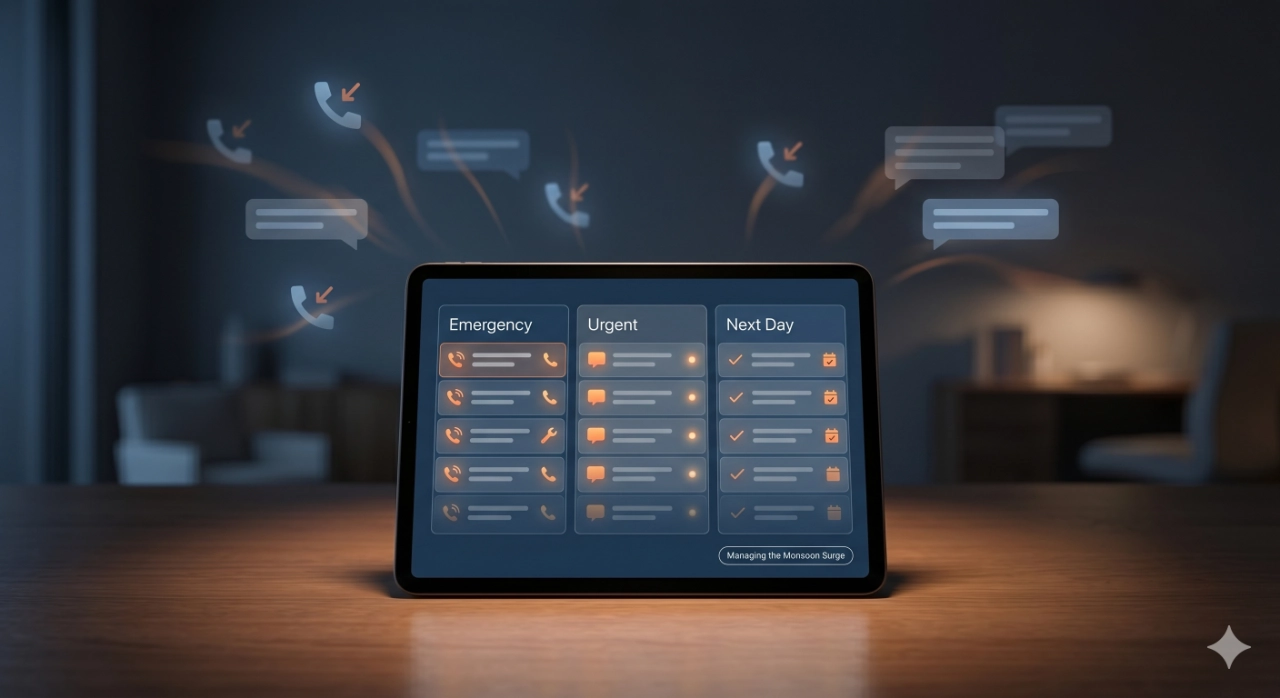
After-hours leads do not behave like office-hour leads
During office hours, a new lead can move through a normal rhythm: answer the call, ask a few questions, check the schedule, and book the next step. After the office closes, that same lead arrives with more uncertainty. The customer may not know whether the problem is an emergency, whether anyone will reply, or whether they should keep searching for another contractor.
That uncertainty is expensive in Phoenix and Buckeye home services. A cooling issue on a hot evening, a plumbing leak after dinner, a pool problem before a weekend, or a storm-related request can feel urgent even when the company is not staffed for full 24/7 dispatch. The goal is not to pretend every business is always open. The goal is to respond quickly with honest boundaries and a clear next step.
A useful after-hours workflow answers four questions before the next request arrives: what counts as a real emergency, what can wait until morning, what message should the customer receive automatically, and who gets alerted when the request truly needs human judgment. Without those rules, the team usually swings between silence and overpromising. Both cost revenue and trust.
Sort every request into emergency, urgent, or next business day
The first rule is classification. An emergency is a request where delay could create safety risk, property damage, or a severe service failure the company is actually prepared to handle. For a plumbing company, that might be an active leak, sewer backup, or no water. For HVAC in Phoenix summer, it might be no cooling for an elderly customer, a family with infants, or a medical need. For pool service, it might be equipment failure that could damage the pump or create a safety concern.
Urgent requests are important but not always dispatch-now situations. A warm house with a unit still running, a clogged drain that is contained, a pool turning green before guests arrive, or a broken irrigation line that has been shut off may need first-priority morning follow-up. Next-business-day requests include quotes, maintenance plan questions, routine tune-ups, review replies, and non-emergency form submissions.
Write these definitions in plain language for the office, the answering service if you use one, and any automation rules. The definition should include what information to collect, what wording to avoid, when a person should be alerted, and when the system should set expectations for the next business day.
Use missed-call text-back without pretending someone is dispatching
Missed-call text-back is useful after hours because it gives the customer proof that the request was received. It should not imply a live dispatcher is standing by unless that is true. A safer message is direct: acknowledge the missed call, ask whether the issue is an active emergency, and explain when the team reviews non-emergency requests.
For example, a contractor might send: Thanks for reaching out to Buckeye GMB Plumbing. Our office is closed, but we received your call. If this is an active leak, backup, or safety issue, reply EMERGENCY and describe what is happening. For routine service, we will follow up the next business morning. The exact wording should match the company, but the structure matters: received, classify, set boundary, request details.
The automation should also avoid creating an endless text conversation nobody is monitoring. If the business does not staff after-hours texting, the confirmation can collect the job type, ZIP code, photos, shutoff status, and preferred callback time. Then it can tag the lead for morning follow-up instead of letting the customer assume a technician is already on the way.
Give forms and GBP messages guardrails
Website forms and Google Business Profile messages need the same honesty. A form confirmation should do more than say submitted. It should tell the customer what happens next, when they can expect a reply, and what to do if the situation is unsafe. For home-service companies, this is especially important because customers may submit forms for problems that should not wait.
A strong after-hours form confirmation can say that the request was received, that office staff review non-emergency requests the next business morning, and that active emergencies should use the emergency path the company has chosen. If the company does not offer after-hours emergency service, say that clearly and avoid language like immediate dispatch, always available, or 24/7 response.
GBP messages deserve similar guardrails because customers often treat them like live chat. Use short replies that confirm receipt, ask for job type and location, and set an honest callback window. Avoid adding phone numbers in GBP post text. When promoting the article from Google Business Profile, use the platform's native CTA button so the post stays clean and compliant.
Escalate only the requests your team is prepared to handle
Escalation should be specific. If every after-hours inquiry pings the owner, the system will be ignored. If nothing escalates, real emergencies get missed. The practical middle ground is a short set of triggers tied to the company's actual capacity.
Examples include text replies containing emergency keywords, forms that select active leak or no cooling, GBP messages that mention safety risk, or voicemail transcriptions that include sewer backup, burning smell, no AC with medical need, or water shutoff. Those triggers can notify the on-call person, answering service, or dispatcher with the customer's name, location, channel, timestamp, and request summary.
The escalation rule should also state what happens next. Does the on-call person call within 10 minutes? Does an answering service qualify the request and book only approved emergency categories? Does the system create a first-priority task for 7:30 a.m.? This is where many automation projects fail: they alert someone but do not define the handoff.
Protect trust by avoiding 24/7 claims you cannot honor
There is nothing wrong with offering 24/7 emergency service if the company has the staffing, pricing, and dispatch coverage to support it. There is a problem with using 24/7 language as a marketing shortcut when the real workflow is a voicemail box and a next-day callback. Customers remember the difference when their kitchen is flooding or their AC is out in July.
After-hours copy should match operations. If the team handles emergency plumbing but not routine quotes, say that. If the HVAC company triages no-cooling calls during heat waves but schedules normal tune-ups in the morning, say that. If pool service does not dispatch after dark, the automation can still collect photos, equipment details, and access notes for first follow-up the next day.
This clarity can improve conversion because it reduces uncertainty. A customer who knows their request was received and understands the next step is less likely to keep filling out competitor forms. Honest boundaries also protect the team from angry callbacks created by vague promises.
Build the next-day recovery workflow before the office opens
Most after-hours revenue is won or lost the next morning. The office should not start the day by digging through voicemails, form notifications, text threads, and GBP messages one by one. The system should create a clean queue with source, request type, urgency, neighborhood, customer details, and the promise already made by the confirmation message.
A practical morning workflow starts with emergency escalations that were not resolved, then urgent first-call requests, then routine estimates and maintenance inquiries. The first reply should reference the customer's after-hours message so it does not feel like a cold callback. For example: We saw your message from last night about the unit blowing warm air in Verrado. Are you still available for a callback this morning?
This is also where follow-up automation earns its keep. If the customer does not answer, send one useful text, leave a concise voicemail, and schedule another attempt before lunch. The point is to recover the lead quickly without turning the morning into a manual scavenger hunt.
Measure response time, recovery, escalations, and lost leads
After-hours response should be measured separately from office-hour speed to lead. The expectations, staffing, and handoffs are different. Track the time from after-hours inquiry to first automated confirmation, the time to human follow-up for urgent requests, the number of true emergency escalations, and the percentage of after-hours inquiries booked the next business day.
Also track lost leads by source. If missed calls convert but GBP messages do not, the message guardrail may be too weak. If form submissions are high but next-day bookings are low, the morning queue may be disorganized. If every lead is marked urgent, the classification rules are too broad. The goal is to tune the workflow until it protects revenue without exhausting the owner or misleading customers.
For Phoenix and Buckeye service companies, the right after-hours system is usually not complicated. It is a small set of honest promises, fast confirmations, clear emergency triggers, and disciplined next-day recovery. That is enough to keep more customers from drifting to the next result while still respecting what the team can actually deliver.
RESOURCES
Tighten the first response, routing, and follow-up workflows that turn new inquiries into booked jobs.
Compare after-hours response rules with the office-hour speed-to-lead workflow.
Find the other handoff gaps where service requests, estimates, and follow-up opportunities get lost.
Ask Buckeye GMB to help define the response, escalation, and next-day recovery workflow for your team.
Define the rules before the next evening request comes in.
Buckeye GMB helps Phoenix and Buckeye-area home-service companies connect missed-call text-back, form confirmations, GBP messages, emergency escalation, and next-day follow-up into a response workflow the team can actually honor.
Plan Your Response Workflow